

personal insight : ค้นหาหนังสือธรรมะ หน้า 13 / 14
หน้าหนังสือทั้งหมด
82
Understanding Craving in Buddhism
knowledge of such ascetics are the Formless Brahma Realms — knowledge gained as the result of developing the formless absorptions [arûpajhâna]. Such ascetics misunderstand that being reborn in the For
This text delves into the Buddhist concept of craving, specifically how its pursuit influences rebirth and suffering. It discusses the misinterpretation by ascetics aiming for the Formless Brahmā real
103
The Noble Eightfold Path and Buddhist Sainthood
fold Path diligently to the extent they are prepared to lay down their life for their practice, have the chance to uproot craving from the mind by transcendental extinction — by attaining the various
This text discusses the profound dedication of practitioners of the Noble Eightfold Path, illustrating how some are willing to sacrifice their lives for their spiritual journey. It highlights notable
128
The Relationship Between Processing, Cognition, and Mindfulness
processing and cognition are nested together inseparably and as a unit take the form of the subtle physical body. If the four faculties are separated, the subtle physical body will die immediately — a
Processing and cognition are intimately linked, forming the subtle physical body. If four faculties are disconnected, the subtle body ceases to exist, impacting physical survival. Mindfulness includes
139
Understanding the Body of Enlightenment in Buddhism
hatred [dosa] and delusion [moha].
Having attained the Sakidägämi Body of Enlightenment,
the meditator uses this Body of Enlightenment to examine
the Four Noble Truths in the Brahmä Body both forwards
บทความนี้สำรวจระดับต่างๆ ของการตรัสรู้ในพุทธศาสนา โดยเน้นถึงการใช้ร่างกายของการตรัสรู้ เช่น Sakidägämi, Anägämi และ Arahant ซึ่งผู้ปฏิบัติธรรมจะสามารถปล่อยวางข้อผูกพันต่างๆ เพื่อเข้าถึงความรู้สูงและกา
142
The Path to Enlightenment: Understanding Dhammakāya
the knowledge arising from cognition may be erroneous.
The knowledge arising from 'knowing', by contrast, de-
pends on the Dhammakāya — it is knowledge based on
true wisdom such as the Four Noble Trut
This text discusses the distinction between knowledge gained through cognition and that which arises from true wisdom based on the Dhammakāya. It details the bodhisatva's rigorous meditation practice
144
The Components of the Eightfold Path
The Components of the Eightfold Path all arise together
When the factors of the Eightfold Path arise, they do so to-
gether — just as the elder monk Koṇḍañña, after listening
to the Dhammacakkapavatta
This text discusses the Eightfold Path, emphasizing how all eight components arise together as illustrated by the elder monk Koṇḍañña's attainment of Stream-Entry. It explains the importance of Right
157
Types of Wives: Characteristics and Comparisons
in other men, looking down on her husband — even when her husband is the one to pay her dowry in the first place — having no gratitude to her husband, and even going as far as attempting to kill her h
This text explores different types of wives and their characteristics, highlighting the negative traits of a wife like an enemy, robber, and boss, and contrasting them with the positive traits of a wi
175
Monitoring and Discretional Mindfulness
7.1 Monitoring Mindfulness
This form of mindfulness is mindfulness that is constantly monitoring the level of wholesomeness in the mind — never letting wholesomeness slip away from the mind and its in
Monitoring mindfulness involves a constant awareness of the wholesomeness in the mind, akin to a treasurer who tracks the assets of an emperor. It encompasses the recognition of various virtues essent
185
Exploration of the Dhammacakkapavattana Sutta
Appendix A.
Dhammacakkapavattana Sutta
for Pursuers of Perfection
1. Introduction
In this Appendix we delve a little deeper into the meaning of the Dhammacakkapavattana Sutta. The Dhammacakkapava
In this appendix, we explore the Dhammacakkapavattana Sutta and its complexities for modern readers. The Sutta serves as a brief but profound insight, showing how the Dhamma represents a path to enlig
193
The Subtlety of Dhamma and the Buddha's Vocation
Dhamma in even greater subtlety. The Buddha was later to preach in the Simsapa forest that there were more leaves in the forest than he held in the palm of his hand. The 84,000 units of Dhamma which
The Buddha preached the concept of Dhamma, comparing his teachings to leaves in his hand versus the endless phenomena of enlightenment. He remembered his vow to end suffering, driven by compassion for
200
The Middle Way and the Four Noble Truths
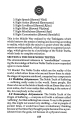
3. Right Speech [Sammā Vācā]
4. Right Action [Sammā Kammanta]
5. Right Livelihood [Sammā Ājīva]
6. Right Effort [Sammā Vāyāma]
7. Right Mindfulness [Sammā Sati]
8. Right Concentration [Sammā Samādhi]
This text discusses the Middle Way as taught by the Tathāgata, emphasizing the importance of Right Speech, Action, Livelihood, Effort, Mindfulness, and Concentration as a means to attain insight and e
215
The Tathāgata and the Cycle of Enlightenment
Yāva kivāñca me bhikkhave, imesu "O! Monks! If the Tathāgata had not fully com-
catusu ariyassaccevaṁ tiparivattaṁ completed these three cycles with their twelve com-
dvaḍasākāraṁ yathābhuṭṭaṁ nān
In this text, the Buddha addresses monks, emphasizing that he has fully completed the three cycles of truth, which affirms his status as a fully self-enlightened Buddha. He claims that this enlightenm
223
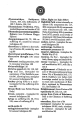
Exploring Dhammakāya and the Eightfold Path
Dhammakāya, Sotāpana: Effort, Right (see Right Effort)
Coarse, 108, 134; defilements of
Eightfold Path: arises internally as 136-7; Subtle, 108, 134
sphere 105; components 20, 117,
Dhammakāya Traditi
This text delves into the Dhammakāya tradition, highlighting key components of the Eightfold Path and its teachings on defilements, enlightenment, and the nature of suffering. Concepts are illustrated
225
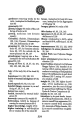
Metaphors and Teachings on Suffering and Generosity
gardener removing weeds by the house-[metaphor for body 65]: inscure, [metaphor for Buddha's practice 95]
generosity 132
ghosts, hungry 34: realm of the, suffering of birth in 63
gossip, malicious (se
This text delves into various Buddhist concepts, including the metaphor of a gardener removing weeds representing the body, and insights into craving, suffering, and the consequences of sensual indulg
28
Title of the Book
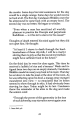
the monks. Some days his total sustenance for the day would be a single orange. Some days he would receive no food at all. The first day Candasaro Bhikkhu went for his almsround he came back with an e
This book provides a comprehensive overview of essential ideas and themes that are crucial for enhancing knowledge and understanding in the relevant field. It's designed to cater to readers looking fo
41
Sample Title
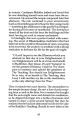
in torrents. Candasaro Bhikkhu bathed and found that he was detaching himself more and more from the en-vironment. He entered the temple compound later that afternoon. The rain continued to pour uncom
This is a sample summary of the content that is being described. It gives an overview and highlights key points without including any URLs except dmc.tv.
90
Untitled
cause only the adepts of Vijiā Dhammakāya could work as a team to plumb the subtle recesses of the human psyche.
Shortly after the inception of the meditation workshop a capable disciple of Kuhn Yay
N/A
98
Sample Title
rally curled and no need to spend hard-earned money to keep it in order!"
Among the workshop meditators was a thin and wily nun called Mae Chee Nag. She was one of the most gifted meditators. She had
This is a sample summary that outlines the key points discussed in the content. It provides insight into the main ideas and areas of focus while directing readers to additional resources available at
100
Untitled Document
praised Kuhn Yay Chandra as being 'number one - second to none', the most adept of his meditators.
Anybody who has had the chance to study the nature of miracles will realize that they are just an ord
No content available to generate a summary.
101
Untitled
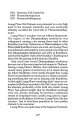
1951 - Honorary Pali Grade Fan
1955 - Phramonkolrajamuni
1957 - Phramonkolthepmuni
Luang Phaw Wat Paknam was promoted to a very high level in the monastic hierarchy and was eventually officiall
No content available to summarize.